Blog Article
Your Instagram page is not your business website
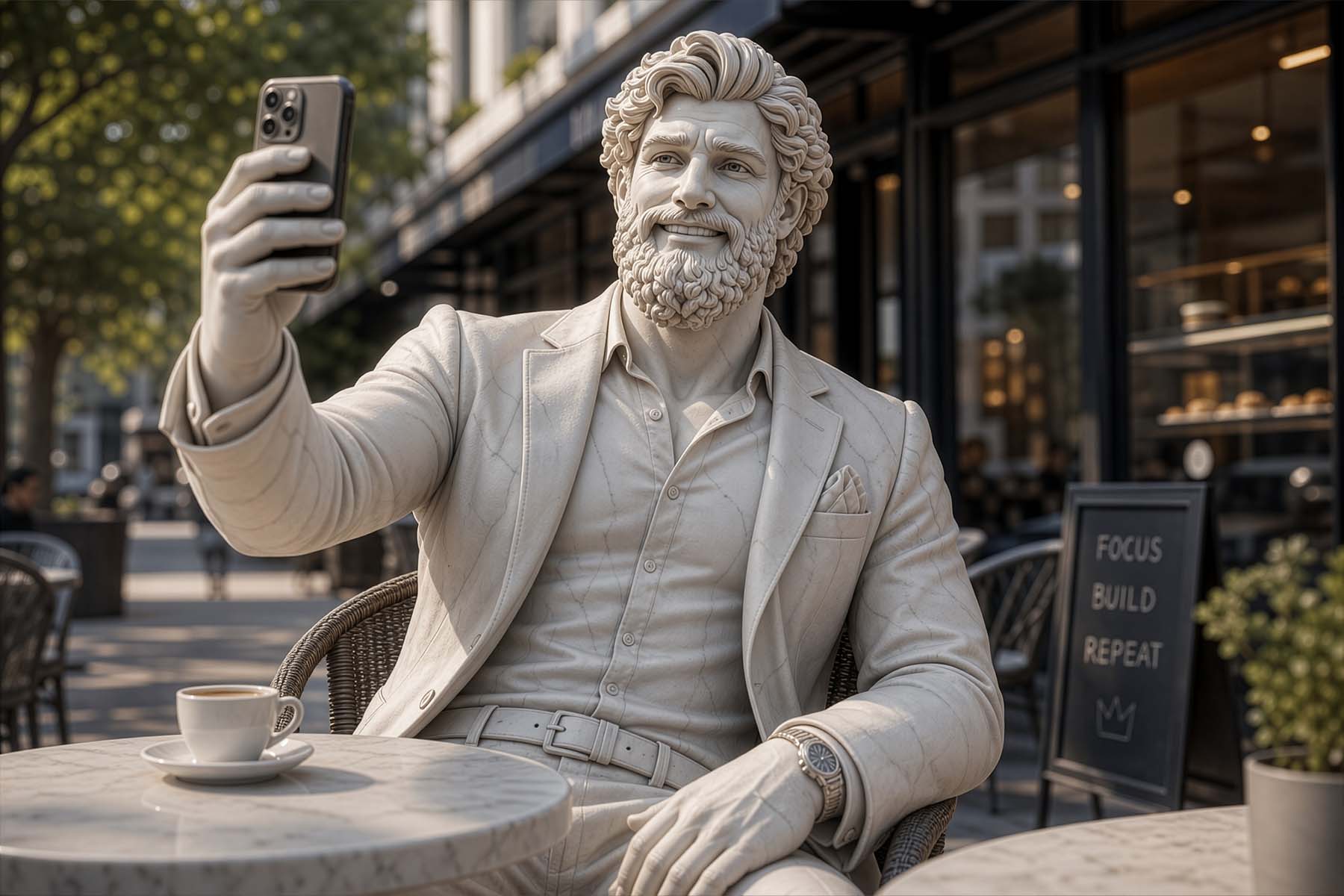

Ever heard of it: “We do not really need a website. We have Instagram.”?
Fair enough. Instagram is fast, visual and full of people who are already bored enough to scroll through 400 videos of strangers making coffee, packing orders or talking into a ring light. For a lot of businesses, it is brilliant for getting attention. You can show products, show faces, show behind the scenes, launch something new and make the place look alive without hiring a film crew and somebody called Head of Brand Storytelling.
Social media matters. Nobody is saying it does not.
The problem starts when a business treats its Instagram page like the whole bloody company. It is not. It is a rented corner in somebody else’s shopping centre, where the landlord changes the signs, moves the entrances and occasionally decides that hardly anyone should see you this week.
Here is the nonsense we kept seeing:
- Attention gets mistaken for ownership. A Reel gets 80,000 views and everybody gets excited. Then the next post reaches 1,200 people for no obvious reason, because the algorithm woke up in a mood. That is not a business foundation. That is renting attention from a platform that does not owe you anything.
- A bio gets treated like a proper explanation. “Helping brands grow ✨ | DM for collabs.” Lovely. Still no clear offer, no prices, no process, no proof and no clue what somebody is supposed to do next. A bio is not a strategy. It is 150 characters trying its best.
- Customers get sent on a scavenger hunt. The answer is apparently in a Story Highlight from last August, a pinned post with old prices or a DM conversation somebody had six months ago. People should not need a map and a packed lunch just to find out what you sell.
A good Instagram page can make people notice you. It can make them curious. It can even make them like you.
But when somebody is about to spend proper money, curiosity is not enough. They want to check whether there is an actual business behind the nice lighting and the little beige quote cards.
People go to Instagram to notice you. They go to your website to check you.
Social media is where people discover you. They see a product, a post, a face, a before-and-after, a clever video or something their mate sent them at 11:43 p.m. That is great. Discovery matters.
Then the serious questions start. What exactly do you offer? Who is it for? How does it work? What does it cost? Can I trust you? Are you still operating next month or is this just one person with a Canva account and a motivational playlist?
That is where a website earns its place.
A website gives people the full picture. Not in tiny slides, not squeezed between a gym selfie and somebody’s dog in a raincoat, but in a structure that makes sense. Your offer. Your products. Your process. Your work. Your proof. Your next step.
That is not boring. That is what people need when they are deciding whether to give you money.
Instagram is brilliant for showing. Show the product. Show the result. Show the team. Show the food. Show the messy studio. Show that there are actual humans behind the brand and not a fax machine from 1998.
But plenty of businesses need more than showing. A consultant has to explain the service. A coach has to explain the offer. A shop has to explain products, delivery and returns. A local business has to explain where it is, when it is open and why somebody should come there instead of going to the place two streets away.
A pinned post is not a landing page. A Highlight is not information architecture. And answering the same five questions in DMs every day is not a sales process unless your long-term business plan is getting carpal tunnel syndrome.
Your business needs a place that is actually yours
Your Instagram page belongs to Instagram. Your followers are there, your content is there and your reach is there, but none of it is really yours in the way your own website is yours.
Instagram decides what gets shown. Instagram decides what the page looks like. Instagram decides which features disappear, which new nonsense gets added and whether your content reaches 20,000 people or your aunt and two guys from school.
You can do very well there. Plenty of businesses do. But you are still playing by somebody else’s rules.
Your website is where you set the rules. You decide what people see first, how your offer is explained, what the next step looks like and whether your business feels like a serious company or just another profile hoping the algorithm is in a good mood.
That matters even more when the offer needs trust. Nobody is choosing a lawyer, a doctor, a consultant, a wedding photographer, a builder or a €3,000 service package because one Reel had nice music behind it. They might find you there. They will still want to check you properly.
And this is where a lot of businesses shoot themselves in the foot. They spend time making social content, then send interested people to a website that has not been touched since someone thought “responsive design” was a new thing.
That is like inviting people into a nice restaurant and then serving the food in the car park.
How can DesignPodio help with this?
We are not telling businesses to stop using social media. That would be daft. Social media is useful. It creates reach, personality and momentum, and it can get people through the door faster than a website ever will.
But attention is not infrastructure. Social media feels busy: likes, comments, messages and numbers going up and down. It looks like something is happening. Sometimes it is. But when somebody wants more than a quick scroll, that attention needs somewhere solid to land.
That is where DesignPodio comes in. We help turn attention into trust, enquiries and sales:
Online Presence gives your business a proper home outside the algorithm: a website, landing pages and content that explain what you do before people get bored and leave.
Commerce gives people a clear way to buy. No “DM us for price,” no lost messages and no waiting three days because the one person handling Instagram is on holiday.
Design Service makes sure your Instagram, website and shop look like they belong to the same business, not like three different people built them after two beers.
That is what DesignPodio is built for: social media gets people interested, and we make sure that interest lands on a clear offer, a proper place to buy and a brand people can actually take seriously.
You may also like
Why we built DesignPodio
May 20, 2026
